


"Carl Filtsch" International Competition & Festival - piano and composition -
- XXX edition -
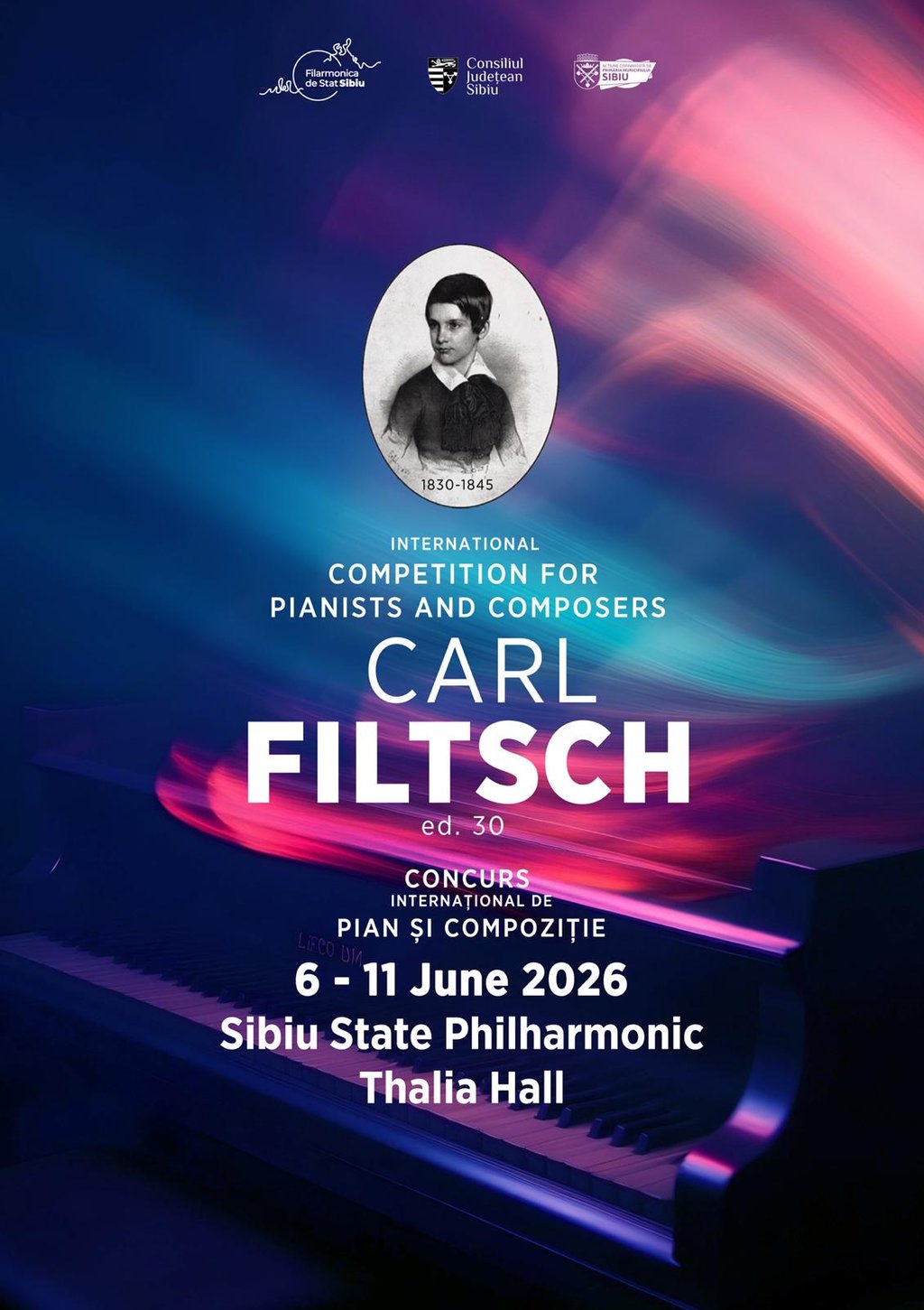
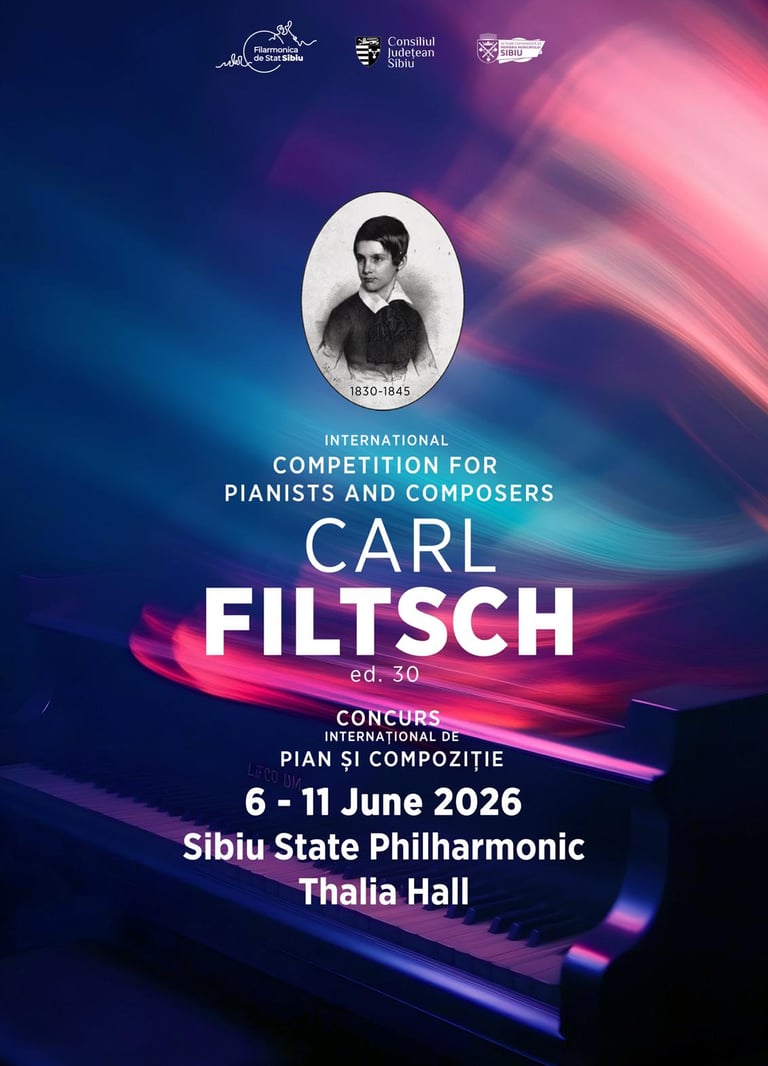
June 6-11, 2026
Competition Schedule:
June 6-7, 10 am - Categories A and B
June 7, 7 pm - Categories A and B Gala
June 8, 10 am - Category C, stage 1
June 9, 10 am - Category C, stage 2
June 10, 10 am-2 pm - Rehearsals with the orchestra for the finalists of category C
June 11, 10 am-1 pm - Dress rehearsal
June 11, 7 pm - Carl Filtsch Gala, category C (FINAL)
COMPETITION
Since the first edition in 1995, Carl Filtsch’s Competition has gradually established during its 30 years, thus becoming the most important piano performance competition from Transylvania.
Besides the main organizer represented by The State Philharmonic from Sibiu, this project has been supported by many institutions, foundations and associations that have been involved in this festival. We list here: Sibiu County Council, Sibiu City Hall, General Consulate of Germany in Sibiu, Haus Des Deutschen Ostens München, Münchener Musikseminar, Democratic Forum of Germans in Romania, Münchensiebenbürgisch-Sächsische Stiftung, Heimatgemeinschaft der Deutschen aus Hermannstadt, Landmannschaft der Siebenbürger Sachsen in Deutschland, Bayerisches Staatsministerium für Arbeit und Sozialordnung, Familie und Frauen.
The jury was mainly formed by seven members, outstanding personalities of Romanian and international musical life. We mention some famous names here: Peter Szaunig (Germany), Walter Krafft (Germany), the two being also the founding members of the Contest, Leonhard Westermayr (Germany), Tomislav Baynov, Georges Petrov, Dimitar Zenghinov, Daniela Andonova (Bulgaria), Perfecto Garcia Charnet (Spain), László Baranyai, Balázs Szokolai (Hungary), Francois Robert Girolami (France), Waldemar Köhn (Ukraine), Paolo Pollice, Rafaele Vinci (Italy), Tatiana Levitina (Russia), Dan Voiculescu, Valentin Gheorghiu, Dan Grigore, Nicolae Brânduş, Gheorghe Costin, Mihai Ungureanu, Viniciu Moroianu, Vlad Dimulescu, Dragoş Mihăilescu, Csíky Boldizsár (Romania).
Many competitors from abroad (Austria, Belarus, Bulgaria, Czech Republic, Cyprus, South Korea, Croatia, France, Georgia, Germany, Italy, Japan, Lithuania, Montenegro, Poland, Portugal, Republic of Moldova, Russia, Serbia, Slovakia, Sweden, Turkey, Ukraine, Hungary) took part into the competition and the amount of prizes has reached 10,000 euros for several years. We would like to mention some of the laureates who won the first prize and had an exceptional performance. Among them, there are pianists that have an impressive career now, whose piano activity is found on the greatest stages of the world: Fan Chyang Yi (Taiwan), Zaranok Slavomir (Belarus), Gudre Zane (Latvia), Alexandra Dariescu (Romania), Alexandru Timofeev (Republic of Moldova), Vucadinovici Ksenia (Serbia), Khozianov Nicolai (Russia), Adela Liculescu (Romania), Tetiana Shafran (Ukraine), Petrova Ilinka (Bulgaria), Szczepan Konczal (Poland), Osminin Alexander (Russia), Mattson Viktor (Sweden), Demény Balázs (Hungary), Kiselev Dmitrii (Russia), Voropciuc Izabela (Romania), Mokrtskyi Vladyslav (Ukraine), Boţac Cadmiel (Romania), Masleev Dimitry (Russia).
FESTIVAL
The first edition of the „Carl Filtsch” International Piano Competition and Festival took place between 28th of August and 3rd of September 1995. Sibiu has been hosting the event for 30 years, being the nearest cultural centre to the place of Carl Filtsch’s birth (Sebeş-Alba/Mülbach) and the idea of setting up this competition-festival belongs to the professors Peter Szaunig and Walter Krafft. Fortunately, the Sibiu Fortress has carefully preserved the cultural heritage left by the Transylvanian Saxons, the atmosphere of the city still bears, in the most significantly way, the existence of an outstanding culture in the context of the era. The effort of the two saxon teachers was supported by a generous help of the local authorities (County Council, Sibiu City Hall, Sibiu Philharmonic), thus this festival becoming the most eloquent example for the promotion of multiculturalism. A phenomenon that the modern world wants to be proud of. Of course Carl Filtsch’s name was unknown at first, both in the country and abroad, but due to the sustained effort of several musicians, mainly pianists, the Festival has gradually become during the 30 years, one of the most prestigious events of its kind in Transylvania.
Since 1993, personalities like Csíky Boldizsár Jr. and Leonhard Westermayr completely mastered Carl Filtsch’s compositions, including them in the concert programs of their own tours, thus making them known to the public around the world, in countries like: Spain, Brazil, Argentina, Uruguay, Mexico, Germany, Scotland, Russia, Republic of Moldova, Ukraine, Hungary, Czech Republic, USA, Japan.
The share of the Festival has increased step by step, two recitals and a gala concert being held with the winners of the three categories in the competition. After the first edition besides several concert pianists (Leonhard Westermayr/Germany, Csíky Boldizsár jr., Adela Liculescu, Octavian Renea /Romania, Slawomir Zaranok/Russia, Andreea Calvani/Italy, Massimiliano Valenti/Italy, Alberto Lodoletti/Italy, Izabela Voropciuc, Mihai Ritivoiu /Romania, Olivier de Spiegeleir/Belgium, Josu de Solaun/Spain etc.) there were also various famous chamber ensembles that performed here (Gabriel Croitoru-violin and Horia Mihail-piano, Matthew Baker- bass-baritone and Johann Markel-piano, Valentin Gheorghiu-piano and Roxana Gheorghiu-piano, Cristian Florea-cello and Steluța Radu- piano, Cristina Bojin-flute and Cristina Mureșan-piano, Horia Văcărescu-violin and Chiho Tsunakawa-piano/Japan, Cristina Anghelescu-violin and Viniciu Moroianu-piano, Transylvanian Saxophone Quartet, Tromba Felix Brass Quartet, Maxim Quartet, Enescu Quartet, Transilvan Quartet, Gaudeamus Quartet), offering an extra colour to this cultural project.
CARL FILTSCH
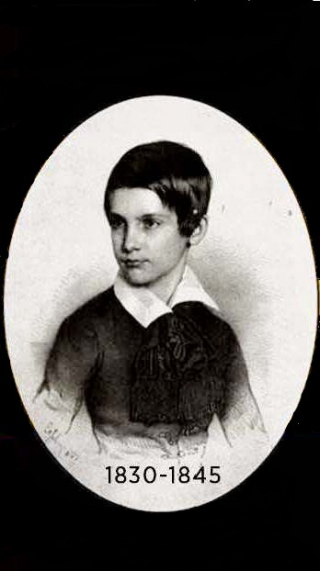
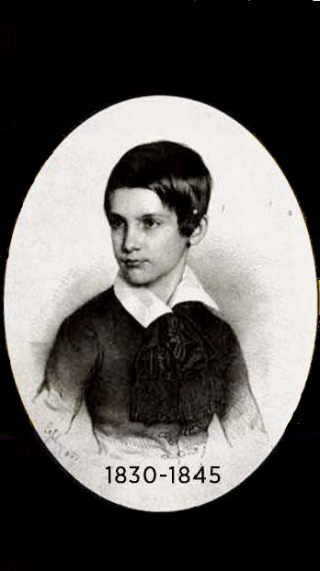
Carl Filtsch (1830-1845) born in Sebeș, Chopin's favorite student, pianist and composer, was one of Transylvania's great musical talents.
Carl Filtsch's personality, compositional and interpretive style sparked the musical world of Europe in the mid-19th century.
This is evidenced by the relationship he had with the most important composers and pianists of that time: Chopin or Liszt, the reception at the royal courts of Europe, his presence in all the significant intellectual circles of Vienna, Paris or London and the numerous articles published.
Despite his unexpected and premature disappearance, he continued to dwell in the consciousness of all those he had the opportunity to touch and inspire. At that moment, considered one of the brightest stars in the sky of romantic Europe, Filtsch also left his mark on the Transylvanian communities through his 1841 extended tour in the homeland he loved so much.
This artistic legacy reached us through the efforts of some great personalities and communities of the 20th century. They continue at the beginning of the 21st century and can be an example of how to restore, preserve and keep values that formed and define us.
Filtsch's sensitivity and precocity could only develop as a result of a unique socio-cultural environment in Sebeș/Mühlbach and its surroundings, characterized by certain customs and patterns of polyethnical life typical of Transylvania.
Through Carl Filtsch (1830-1845), with Saxon and Hungarian origins, the concerns of his predecessors starting from the 16th century onward for the realization of a Western-type musical life in Transylvania, materialized; The beginning of such a complicated path was achieved through the socio-cultural impact of the artistic concerns within the Saxon communities, through a special philosophy of life of the Filtsch family, through the support
of people aware of the value of culture in Hungarian and Habsburg circles, and especially the Bánffy family;
The Vienna Period (1837-1841): His teachers were the best from Vienna: Wieck, Mittag, Sechter. He met often with Clara Wieck, Thalberg and Liszt (whose Schubert serenade transcription was a gift to the "prodigy of Transylvania"). Along with Countess Bánffy, he was a constant presence in the highest circles of Vienna but also at all significant cultural events. All these formative factors lead to the brilliant debut in 1841 with Concerto no. 3 for piano and orchestra in C minor by Beethoven, with Filtsch's cadence, at age 11 in the Wiener Musikvereinsaal.
In 1840 Filtsch writes to his family: "Franz Liszt is in Vienna. I went to his concerts and I met him often. ... I wanted to kiss his hand, but he said, "No, don't do this, we're colleagues!" When I returned to the piano, he joined my improvisations, imitating the thunder with his left hand and the lighting with his right. I didn't hear anything more beautiful in my life. - God, how can this man play! He gave me his transcript of Schubert's Serenade with the dedication: To the prodigy of Transylvania".
Carl Filtsch's tour in Transylvania (with the first concerts held in Budapest) represented a distinctive cultural transfer between regions, with a special resonance in the hearts of those who listened to the Filtsch brothers. Filtsch's dedication was seen through the repertoire he encompassed. Thus, he performed 4 Phantasies by Thalberg, among the most difficult, demanding works by Herz (some played with Joseph, either as piano four hands or as piano duo), the Septet by Hummel, Concerto for piano and orchestra op. 25 by Mendelssohn and works composed by himself and Joseph. The tour included no less than 12 performances (2 in Budapest, 2 in Sebeș/Mühlbach, 2 in Cluj/Kolozsvár/Klausenburg, 3 in Sibiu/Hermannstadt , 2 in Brașov/Kronstadt, 1 in Orăștie/Broos).
The Paris period (1841-1843) marked the completion of Filtsch's piano studies with the full support of his masters, Liszt and Chopin (the most important pianists of the 19th century). Their affection for Carl Filtsch is evident from the reports. Liszt gave him individual lessons and introduced him to his entourage as the prodigy of his country. Chopin made great sacrifices to promote Filtsch and accompanied him in front of 400 and 500 guests in Paris salons, with Filtsch playing Chopin's Concerto in E minor for piano and orchestra. Apart from these performances that Chopin made for "the only genius he mentored", Filtsch presented with orchestra accompaniment, the same concert in the Érard salon but also a diverse solo repertoire. In the Érard salon and in the Concert Hall of the Paris Conservatoire, Filtsch triumphantly presented a selection of works by Bach, Beethoven, Thalberg, Chopin and Liszt.
In addition to being Chopin's favorite student and a truly exceptional performer of his music, Filtsch is the focus of attention in all circles of Parisian high society, where he achieves success after success by interpreting monumental works.
From Meyerbeer's, Chopin's and Liszt's never-before-seen statements, receiving an Erard piano as gift or organizing a farewell evening with 500 guests at Baron Rotschild's house, all this reveals only part of Filtsch's fame in Paris.
In august 1842 Joseph Filtsch writes to his parents: "While Chopin was gone, Liszt offered to give the boy piano lessons. Going arm in arm, Liszt presents him as a prodigy from his country. ... He invited us to a party in the house of countess d'Agoult. The whole aristocracy of music and science, even Berlioz and ladies from the high-society of the whole world were present here. Carl was very successful here and was declared the successor of Liszt. Liszt said:
"If the kid starts to travel the world, I will have to close my shop!"
Liszt wrote a letter to the Filtsch brothers after leaving Paris: "Whatever happens, keep a little corner of remembrance of me, and believe me ever yours affectionately. Affectionate remembrances to your brother Joseph. Farewell again. I embrace you affectionately."
Once, after playing his Concerto in E minor, Chopin declared with tears in his eyes, "God, what a child! No man understood me as well as this child, he is the most special of all the ones I have met. It is not a copy, it is a feeling, a musical feeling that makes him play spontaneously, without intention, as if it should be. Almost all my pieces he plays so, without ever hearing them performed by me, without the slightest indication from me - he does not interpret them exactly like me, because he puts his own mark - but his interpretation is not less valuable than mine."
Meyerbeer wrote about Filtsch: "Allow me to introduce to you a remarkable talent. Little Filtsch not only executes in a masterly fashion the compositions of Liszt, Thalberg, Chopin, but he has a profound musical sentiment; he understands the character of every kind of music. I heard him play Beethoven and Johann Sebastian Bach in such an astonishing manner that I have the greatest hope for his musical future. I send you this lovable child."
"He performs the most difficult and delicate compositions of all schools not only with with extraordinary dexterity of the fingers, but also with a feeling, style and delicacy that leave no room for criticism even from the most discerning connoisseur."
London Tour (1843):
The success achieved by Filtsch in London (1843) was not forgotten by several generations of musicians. Filtsch was a consummate ambassador of Chopin's music in the capital of the British Empire, performing nocturnes, waltzes, scherzos, mazurkas, difficult studies, impromptus and the Concerto for piano and orchestra no. 2. The concerts held at St. James Theatre, Hannover Square Rooms, Buckingham Palace (in front of Queen Victoria) and at the British court also included works by Liszt, Bach, Mendelssohn and Moscheles;
Musical World wrote: "Carl Filtsch is one of the most wonderful appearances in the history of art. In the two months since he is with us, he has acquired a rare reputation. He has shown us that it is not unnatural for a teenager, even a child, to have the spirit and energy of a man. There is no brighter future than this child promises. "
"Carl Filtsch deserves his reputation for being the one who made Chopin beloved by the English public."
„But what are we to say to little Filtsch? We really are at a loss for words to convey any idea of the delight he gave us. His reception throughout was most enthusiastic and gratifying. The playing of Filtsch is endowed with every characteristic of excellence. The most consummate taste, the profoundest poetical feeling and a facility of execution which is prodigious.”
The last concerts in Vienna (1843-1844), mostly in a full Musikverein/Gesellschaft der Musikfreunde hall, included the most diverse repertoire up to that time and the highest appreciation. In addition to appearing as a soloist with the Court Opera Orchestra (from the same musicians was formed in 1842 the Vienna Philharmonic) with Concerto no. 3 for piano and orchestra by Beethoven, Concerto no. 1 for piano and orchestra by Chopin and Concerto for piano and orchestra no. 2 by Mendelssohn, Filtsch tackled, in the more than 8 performances works for solo piano by: Chopin, Liszt, Bach, Thalberg, Mayer, Beethoven, Hummel and his own composition Scherzo/Impromptu. In the last concert in March, he was scheduled to present his own Konzertstück with the orchestra.
Shadows of the End (1844 - 1845): He returns for a short time to Vienna, then spends the summer of 1844 happy in Transylvania. Symptoms such as flu or measles had already appeared in his letters. At the doctors' recommendation, he was sent to Venice baths with Countess Bánffy, but although he hoped and believed that he was on the path to recovery, in the summer of 1845 he left behind forever those who loved him so much. By his side until his final moments was Countess Bánffy.
Thus, we conclude that the pianist and composer Carl Filtsch was the Transylvanian acclaimed to the same extent by all intellectual circles, by his masters, teachers, by all publications, by the harshest and most respected critics, by the greatest composers and performers of the 19th century with whom he interacted.
Filtsch performed compositions from all schools of piano playing and included in his repertoire representative works by the following composers: Bach, Beethoven, Chopin, Filtsch Josef, Herz Henri, Hérold Ferdinand, Hummel, Liszt, Mayer Charles, Mendelssohn, Moscheles, Mozart, Thalberg sau Weber. He was also a master of improvisation, sight-reading and transposition.
Most of Carl Filtsch's COMPOSITIONS are for solo piano:
Sechs kleine Präludien, Choral,
op. 1 (nr. 1 Andante, nr. 2 Nocturne D-flat major), op. 2 Introduktion und Variationen über ein berühmtes Thema aus der Oper "die Piraten" von Bellini, Präludium und Fuge, op. 3 Premières pensées musicales... pour le piano (nr. 1 Romance sans paroles, nr. 2 Barcarolle, nr. 3 Mazurka),
op. 8 Etude F major, Oeuvres posthumes (nr. 1 Impromptu G-flat major, nr. 2 Impromptu B-flat minor, nr. 3 Adieu/Das Lebewohl von Venedig), op. 10 Etude A major, op. 14 Notturno C sharp major.
Through Konzertstück for piano and orchestra and Ouvertüre for orchestra he reveals his mastery in handling the orchestral apparatus. In the Allegretto con variazioni for violin and piano, he surprises us in the realm of chamber music with his inventiveness, thematic content with remarkable development, as well as through contrast and balance in form.
Among the most recent discovered works are five other pieces for solo piano: Adieu!, Romance sans paroles, Albumblatt, Nocturne in E-flat minor, Étude héroïque, Fantaisie dramatique, and a Vocal Quartet.
RULES
1. CALENDAR
The XXX edition of the “Carl Filtsch” International Festival and Competition For Pianists and Composers will take place in Sibiu, Romania, between the 6th and 11th of June 2026 and it is dedicated to Carl Filtsch, in the memory of this exceptional Transylvanian musician who was born in 1830 in Sebeş-Alba-Mühlbach (Transylvania) and died in Venice in 1845.
All the categories and the rounds of the competition are open to the public and will take place at the Thalia Hall of the Sibiu State Philharmonic. Prizes will be awarded in the frame of the Closing Gala Concert.
2. COMPETITION’S CATEGORIES
The Competition is open to young musicians from all countries and is organized for the following three age-categories:
CATEGORY A: born after the 27th of May 2014
CATEGORY B: born between the 27th of May 2010 and the 26th of May 2014
CATEGORY C: born between then 27th of May 1993 and 26th of May 2010
The Jury will evaluate and award prizes not only for the piano performances of the candidates, but also for their original piano compositions.
3. COMPETITION’S PROGRAM AND REPERTOIRE
For A and B categories, the competition is organized in only ONE ROUND.
CATEGORY A:
The total lenght of this single round shall be between minimum 10 and maximum 15 minutes.
The candidate’s repertoire shall include:
a) one or more polyphonic works from the Baroque repertoire, at candidate’s choice
b) one of the following works composed by Carl Filtsch*, at candidate’s choice:
Choral
Romance
Barcarolle
Andante op.1
no.1-3 / 4-6 preludes from "Six Little Preludes"
c) one or more works at candidate’s choice
Optional: the candidate can choose to perform one or more own original compositions of maximum 3 minutes duration, that shall be included in the maximum 15 minutes lenght of the single round
*Works by Carl Filtsch can be downloaded here: https://drive.google.com/drive/folders/1BSYL8qYwbSlDVV8oOBOmYyeKZCsDd8E2?usp=drive_link
CATEGORY B:
The total lenght of this single round shall be between minimum 20 and maximum 25 minutes.
The candidate’s repertoire shall include:
a) one or more polyphonic works from the Baroque repertoire, at candidate’s choice
b) one of the following works composed by Carl Filtsch*, at candidate’s choice:- Adagio in C minor “Adieu”- Mazurka- Nocturno op.1 no.2,- Nocturno op.14 in C sharp major- Prelude and Fugue in C minor- Etude op.10 in A major*
c) one or more works at candidate’s choice
Optional: the candidate can choose to perform one or more own original compositions of maximum 4 minutes duration, that shall be included in the maximum 25 minutes lenght of the single round
*Works by Carl Filtsch can be downloaded here: https://drive.google.com/drive/folders/1BSYL8qYwbSlDVV8oOBOmYyeKZCsDd8E2?usp=drive_link
CATEGORY C:
For category C, the competition is organized in THREE ROUNDS.
FIRST ROUND
The total lenght of the first round shall not exceed 15 minutes.
The candidate’s repertoire shall include:
a) Johann Sebastian Bach: Prelude and Fugue from the Well-Tempered Clavier Book 1 or Book 2, at candidate’s choice
b) Fr. Chopin: two Etudes from Op. 10 or Op. 25
c) one of the following works composed by Carl Filtsch, at candidate’s choice
Impromptu in G flat major
Impromptu in B flat minor
Introduction and Variations in A major
Etude op.8 in F major
Optional: the candidate can choose to perform one or more own original compositions of maximum 4 minutes duration, that shall be included in the maximum 15 minutes lenght of the first round.
*Works by Carl Filtsch can be downloaded here: https://drive.google.com/drive/folders/1BSYL8qYwbSlDVV8oOBOmYyeKZCsDd8E2?usp=drive_link
SECOND ROUND
The total length of the second round shall not exceed 30 minutes.
The candidate’s repertoire shall include:
a) the first movement of a Haydn, Mozart or Beethoven Piano Sonata
b) one or more works from the Romantic repertoire, at candidate’s choice
c) one or more works from the XXth century or contemporary repertoire, at candidate’s choice
THIRD ROUND
The candidate shall choose one of the following Piano Concertos:
W. A. Mozart: Piano Concertos no. 15, 17, 19, 20, 21, 22, 23, 24, 25, 26 or 27
L. van Beethoven: Piano Concertos no. 1, 2, 3, 4 or 5
Carl Filtsch: Konzertstück in B minor for Piano and Orchestra*
F. Chopin: Piano Concerto no. 1 or 2
Schumann: Piano Concerto in A minor
F. Liszt: Piano Concerto no. 1 or 2
E. Grieg: Piano Concerto in A minor
P. I. Tchaikovsky: Piano Concerto no. 1
S. Rachmaninoff: Piano Concerto no. 2, 3
M. Ravel: Piano Concerto in G Major
C. Franck: Symphonic Variations
*Works by Carl Filtsch can be downloaded here: https://drive.google.com/drive/folders/1BSYL8qYwbSlDVV8oOBOmYyeKZCsDd8E2?usp=drive_link
All works must be performed from memory. This rule applies to all the categories of the Competition. Candidates shall provide scores for the Jury members if the Jury members will ask for them. Own original compositions scores shall be provided to the Jury members. During the competition, candidates have the possibility to daily practice in different locations put at their disposal by the organizers on Yamaha instruments provided by Yamaha Music Europe (Sibiu State Philharmonic, Mirror Hall –The Democratic Forum of the Germans in Romania, other locations).
4. AWARDS
„Carl Filtsch” Piano and Composition International Festival and Competition will award the following cash prizes and perks:
CATEGORY A & CATEGORY B: 4000 euro
CATEGORY C:
First Prize - 3000 euro
Second Prize - 2000 euro
Third Prize - 1000 euro
CATEGORY C First-Prize Winner of the „Carl Filtsch” Piano and Composition International Festival and Competition will receive an invitation to perform a Piano Concerto in the annual concert seasons of the Sibiu State Philharmonic and Târgu Mureș State Philharmonic.
The jury may award, if appropriate, the following special prizes (regardless of the category) :
Special Prize for the best performance of a work composed by Carl Filtsch
Special Prize for an own original composition
„Peter Szaunig” Special Prize
„Walter Krafft” Special Prize
First-Prize Winners of previous editions of „Carl Filtsch” Piano and Composition International Competition and Festival cannot participate anymore in the same age category.
JURY
The jury consists of recognized personalities from the international musical stage.
1. Csiky Boldizsar
2. Cristian Lupeș
3. Nadja Preisler
4. Alessandro Marano
5. Ivan Shemchuk
6. Luca Torrigiani
7. Marco Scolastra
8. Miguel Campos Neto (gala conductor)
The jury reserves the right not to award prizes to certain categories or to distribute the prizes within the categories to several candidates. All candidates will receive participation certificates and/or diplomas. Jury’s decisions are irrevocable. No appeals accepted.
REGISTRATION
Applications shall be submitted not later than 6TH OF MAY. All the required documents shall be sent at the following address: Filarmonica de Stat Sibiu Str. Cetăţii 3-5550160 Sibiu-Romania.
Candidates can also submit their application online:
https://forms.gle/PEhUZnCzEkHujFFu5
On post submitted applications, please mention: "For The „Carl Filtsch” International Piano and Composition Competition and Festival"
REQUIRED DOCUMENTS
filled-in application form (pdf., jpg., jpeg)
copy of the birth certificate (pdf., jpg., jpeg)
copy of the Identity Card / Passport (.pdf, .jpg, .jpeg)
a short artistic biography / presentation in Romania and/or English (.doc, .pdf)
a recent photo (.jpg, .jpeg)
repertoire form that shall include the following information:
name and surname of the candidate
competition category applied for
complete name of the composer and complete title and duration of the works to be performed
Once the application is submitted, the candidate is bound and agrees to the terms and conditions of the The „Carl Filtsch” International Piano and Composition Competition and Festival.
REGISTRATION FEE
Registration is completed upon payment of the participation fee transfered to:
Sibiu State Philharmonic
Fiscal Code: 4556263
RO08TREZ57621G330800XXXX
CATEGORY A AND B:30 € (in Romanian currency at the equivalent exchange rate of the registration day in Sibiu)
CATEGORY C: the equivalent in LEI of 50 € (in Romanian currency at the equivalent exchange rate of the registration day in Sibiu)
ADDITIONAL INFORMATION
Additional information regarding registration, travel to Romania/Sibiu and/or accommodation and board facilities during the competition in Sibiu can be obtained from the Sibiu State Philharmonic Secretariat, every week from Monday to Friday between 10.00 AM and 3.00 PM